World Cancer Day: Compassionate Ocular Oncology Care at Tennessee Retina
World Cancer Day: Compassionate Ocular Oncology Care at Tennessee Retina
Each year, World Cancer Day serves as a global reminder of the strength, resilience, and courage of those facing cancer—and the importance of awareness, early detection, and compassionate care. While many people think of cancer as affecting organs like the lungs, breast, or skin, cancer can also develop in or around the eye.
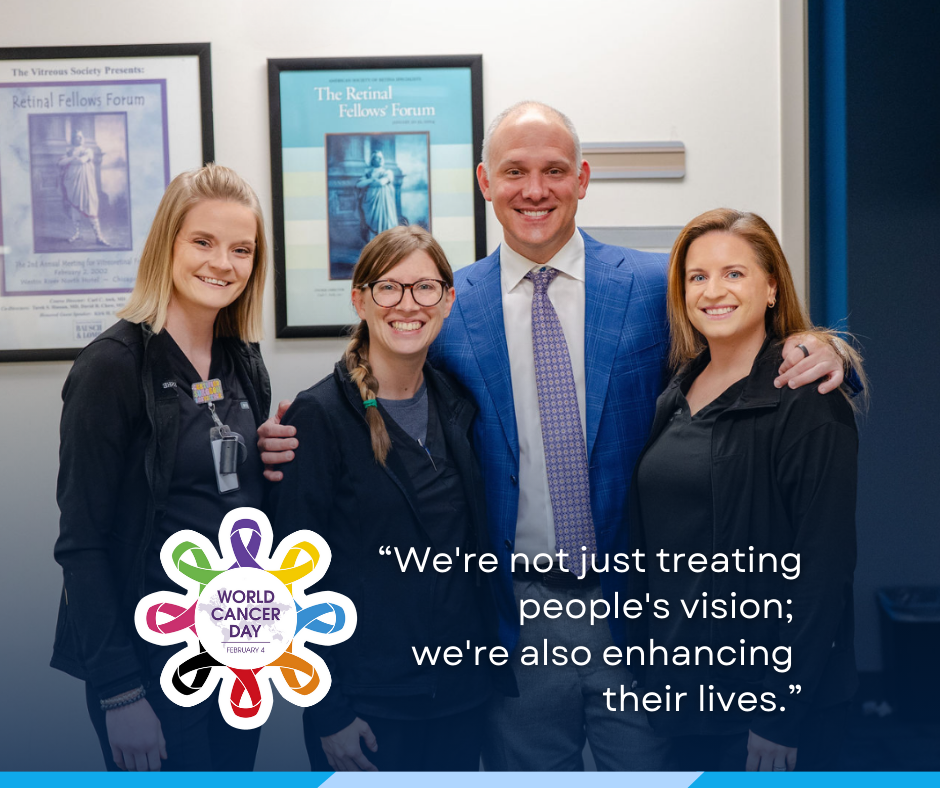
At Tennessee Retina, our Ocular Oncology Team, led by Dr. Reichstein, specializes in diagnosing and treating rare eye cancers, providing expert medical care alongside education, honesty, and unwavering support for patients and their families.
Understanding Ocular Cancer
Ocular cancer refers to rare conditions that develop within or around the eye. One of the most common forms in adults is ocular (uveal) melanoma, which arises from pigment-producing cells inside the eye. Although rare, ocular melanoma can be both sight-threatening and life-threatening if left untreated.
One of the challenges of ocular cancer is that it often develops without early symptoms. Many patients do not experience pain or noticeable vision changes and are diagnosed during a routine, dilated eye exam. This makes regular eye care and timely referral to a specialist especially important.
The Importance of Early Detection and Education
Early detection plays a critical role in managing ocular cancer. When tumors are identified early, there may be more options available to preserve vision and protect overall health.
Dr. Reichstein emphasizes that education and transparency are essential parts of care. Patients often arrive feeling overwhelmed, anxious, and uncertain about what lies ahead. By clearly explaining the diagnosis, treatment options, and expected outcomes, the ocular oncology team helps patients feel informed and supported as they move forward.
Personalized, Specialized Treatment
There is no one-size-fits-all approach to ocular cancer care. Each patient’s treatment plan is carefully tailored based on the type, size, and location of the tumor, as well as the patient’s overall health and visual needs.
Treatment may include:
- Advanced diagnostic imaging and close monitoring
- Targeted radiation therapy, such as plaque brachytherapy
- Coordination with medical oncologists and other specialists when needed
The goal is always to provide the most effective treatment while preserving vision whenever possible and supporting the patient’s quality of life.
Care That Goes Beyond Treatment
For the Ocular Oncology Team at Tennessee Retina, caring for patients means more than managing disease—it means walking alongside patients through some of the most challenging moments of their lives.
Patients facing an ocular cancer diagnosis often carry fear not only for their vision, but for their future. Our team is committed to guiding patients from diagnosis through treatment and long-term follow-up with compassion, consistency, and trust.
Seeing patients regain confidence, continue meaningful activities, and witness important life moments is one of the most rewarding parts of this work.
— Dr. ReichsteinThe anxiety a patient carries when they walk through the door becomes my anxiety.
My job is to guide them to the best possible outcome—and be with them every step of the way.
Honoring World Cancer Day
On World Cancer Day, we honor the strength of those affected by cancer and reaffirm our commitment to education, early detection, and compassionate specialty care. Raising awareness about ocular cancer helps ensure that patients receive timely diagnosis and expert treatment when it matters most.
If you or a loved one have concerns about ocular health or have been referred for specialized retinal or ocular oncology care, our team is here to help. Routine eye exams and early evaluation can make a meaningful difference.
Read More about our Oncology Department HERE