AMD & Low Vision Awareness Month: Understanding Risk Factors and the Importance of Early Detection
AMD & Low Vision Awareness Month: Understanding Risk Factors and the Importance of Early Detection
Age-related macular degeneration (AMD) is one of the most common causes of central vision loss in adults age 55 and older. Because AMD often develops gradually and may begin with subtle changes in vision, awareness and early detection play a critical role in protecting sight.
During AMD & Low Vision Awareness Month, we’re highlighting what patients should know about AMD — including risk factors, early symptoms, and how advances in care and research are helping preserve vision.
What Is Age-Related Macular Degeneration?
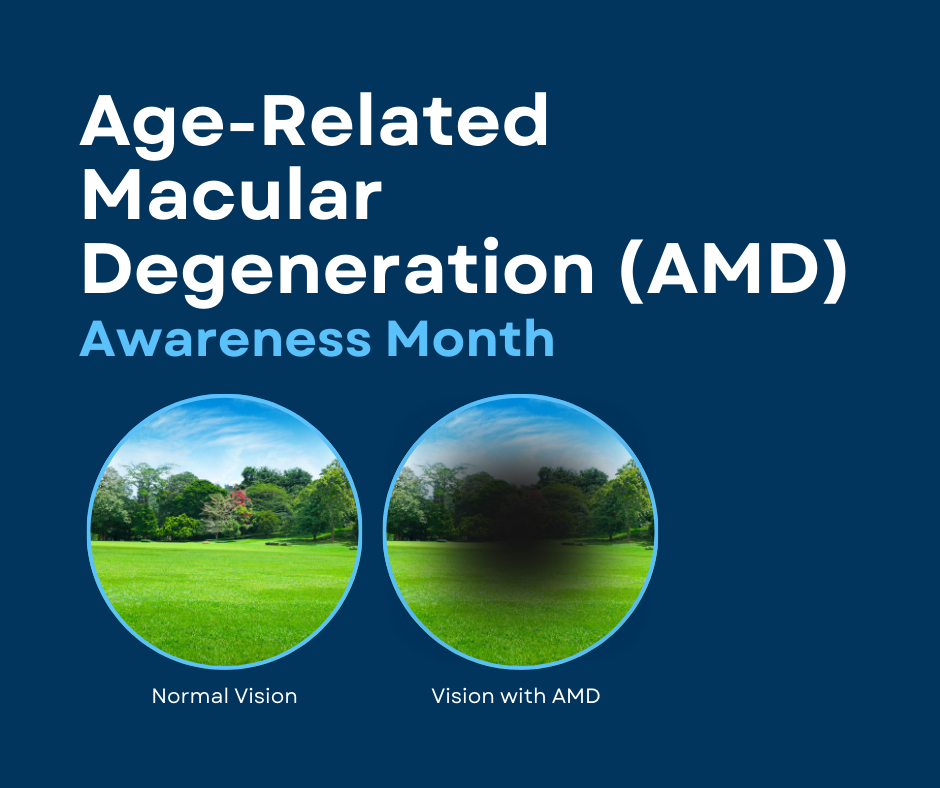
AMD is a progressive retinal condition that affects the macula, the part of the retina responsible for sharp, central vision. This area is essential for activities such as reading, driving, recognizing faces, and seeing fine details.
Over time, AMD can lead to blurring, distortion, or blind spots in the central field of vision. While peripheral vision is often preserved, central vision loss can significantly impact daily life.
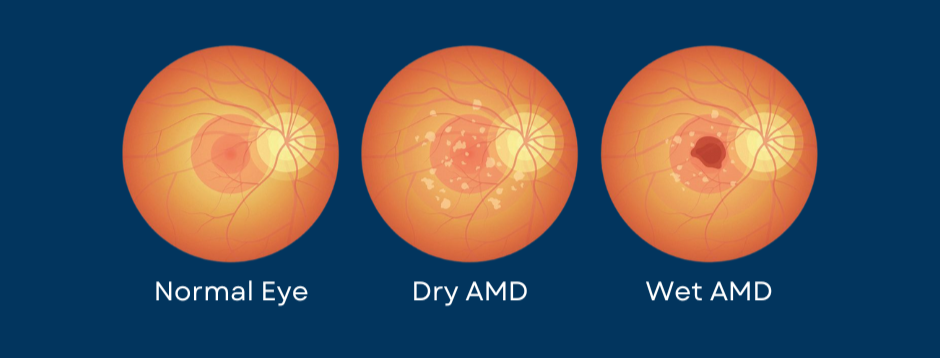
There are 2 types of AMD: Dry and Wet
- Dry AMD: most common form and typically progresses slowly, involving gradual breakdown of the macula.
- Wet AMD: less common but more serious, caused by abnormal blood vessels that leak under the retina.
Understanding Risk Factors for AMD
Although anyone can develop AMD, certain factors may increase a person’s risk. These include:
- Aging
- Family history of AMD
- Smoking history
- Cardiovascular disease and high blood pressure
- Prolonged exposure to ultraviolet light
Understanding these factors can help individuals take proactive steps toward monitoring their eye health and seeking regular eye examinations.
Recognizing Early Signs and Symptoms
AMD often begins quietly. Early symptoms may include:
- Blurred or fuzzy central vision
- Straight lines appearing distorted or wavy
- Difficulty reading or seeing fine details
- Dark or empty areas in the center of vision
Because these changes can be subtle at first, routine eye exams and at-home monitoring tools, such as the Amsler grid, are important for detecting changes early.
The Importance of Early Detection
While there is no cure for AMD, early diagnosis allows for timely management that may help slow disease progression and preserve vision. Advances in imaging and treatment options have significantly improved outcomes for many patients, particularly when changes are identified early.
If vision changes are detected, a retina specialist can determine the type and stage of AMD and recommend an individualized care plan.
Advancing AMD Care Through Research
At Tennessee Retina, our physicians are dedicated to providing expert care for patients with macular degeneration while also contributing to the future of AMD treatment. Through ongoing clinical research and participation in ground-breaking studies, Tennessee Retina is helping advance therapies designed to slow vision loss and improve long-term outcomes for patients living with AMD.
Taking the Next Step
Awareness is the first step toward protecting vision. Understanding your risk factors, recognizing early symptoms, and seeking timely care can make a meaningful difference.