Monthly Eylea HD in AMD and DME
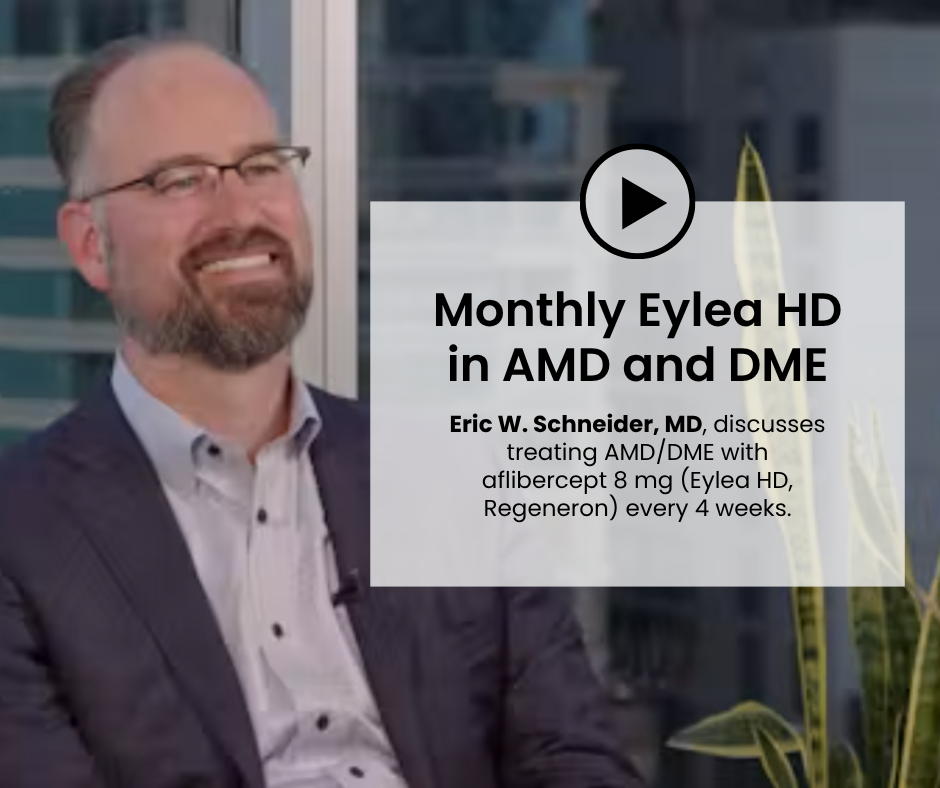
Dr. Eric Schneider Presents ELARA Trial Data at ASRS 2026
Watch Dr. Schneider Discuss the ELARA Data: https://eyetube.net/meeting-coverage/asrs-2026/monthly-eylea-hd-in-amd-and-dme
Dr. Eric Schneider recently presented data from the Phase 3b ELARA clinical trial at the American Society of Retina Specialists (ASRS) 2026 Annual Meeting, highlighting outcomes associated with monthly aflibercept 8 mg in previously treated patients with neovascular age-related macular degeneration (wet AMD) and diabetic macular edema (DME).
Following the presentation, Dr. Schneider was featured by Retina Today as part of EyeTube’s ASRS 2026 meeting coverage, where he discussed the 24-week findings and what they may mean for treatment flexibility in certain patients with these retinal conditions.
ELARA Trial Examines Monthly Aflibercept 8 mg
The ELARA trial was primarily designed as a safety study. In the trial, patients who had previously received treatment for neovascular AMD or DME received seven monthly injections of aflibercept 8 mg through Week 24, followed by a treat-and-extend regimen through Week 96.
Despite being a previously treated patient population, the study demonstrated meaningful visual and anatomic improvements during the first 24 weeks.
Among patients with neovascular AMD, visual acuity improved by approximately 2.5 letters through Week 24. Patients with DME experienced an improvement of approximately 3.2 letters.
These functional improvements were accompanied by reductions in central subfield thickness:
- Neovascular AMD: 27.1-micron reduction
- DME: 39.7-micron reduction
Safety Findings
The study also evaluated the safety of monthly aflibercept 8 mg. Dr. Schneider noted that the incidence of serious ocular treatment-emergent adverse events was low, with a pooled intraocular inflammation (IOI) rate of approximately 1%.
Overall, the safety profile observed in ELARA was consistent with the previously established safety profile of aflibercept 2 mg and 8 mg in prior clinical trials.
Why These Findings Are Interesting
One notable aspect of the ELARA population was that these patients had already been receiving treatment for their retinal disease. Approximately 40% of patients had been receiving monthly injections during the six months before entering the study, and the baseline best-corrected visual acuity was approximately 20/40.
Even within this previously treated and reasonably well-managed population, researchers observed additional visual and anatomic improvements following monthly treatment with aflibercept 8 mg.
According to Dr. Schneider, these findings may support the potential benefit of greater treatment flexibility and more intensive dosing for certain patient populations.
"What I found most interesting was the anatomic and functional improvements that we saw in this previously treated patient population."
Advancing Retina Care Through Research
Clinical research plays an important role in advancing the understanding and treatment of retinal diseases. Presentations such as Dr. Schneider’s at ASRS provide an opportunity for retina specialists from around the world to share clinical data and discuss how emerging evidence may influence patient care.
Tennessee Retina is proud to have physicians actively involved in national clinical research and education, contributing to the continued advancement of retinal care.
Watch Dr. Schneider Discuss the ELARA Data: https://eyetube.net/meeting-coverage/asrs-2026/monthly-eylea-hd-in-amd-and-dme
The information presented above summarizes findings discussed by Dr. Schneider from the ELARA clinical trial. Treatment decisions should always be individualized by a patient's physician based on their specific condition and circumstances.